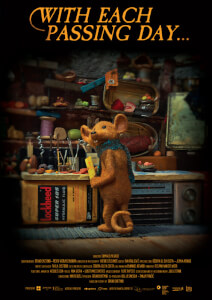
D. Piedade is an old mouse who lives in a small village in the mountainous interior of Portugal. Her existence is mainly composed of loneliness and memories, and a hardened routine, guided by the regular rhythm of the clock and the tea she drinks with her friends, two sisters, who live in the same village. The accumulation of this routine will awaken in D. Piedade the desire to break it. Using a strong memory that drives her to act, she returns to where she was happy, hoping to regain some kind of new happiness.
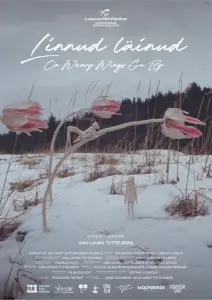
A wintry poem about the Nordic nature. The sun moves low and days get shorter. Birds fly South, porcelain animals and insects hide from the freezing wind and snow. Only a small porcelain girl wanders the abandoned landscape with no way out.
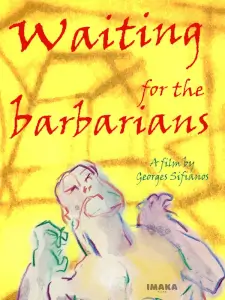
In a city—evoking, without specificity, a city of the Roman Empire—the poem depicts a state of waiting: the arrival of the “Barbarians” has been announced, the emperor himself seems ready to submit to their authority, and every hypothesis about the future is possible. The city holds its breath in anticipation… But who, exactly, are these “Barbarians”? And what if they do not come?
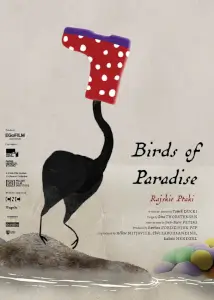
Bird droppings. To most, a nuisance. But for a remarkable flock of flightless birds, they are the foundation of life itself. There is a delicate harmony in their hidden world – until one day when a mysterious object washes up on shore. What begins as curiosity sparks a profound shift, leading the flock into a new era of cultural and technological change. Once happy with simplicity, the birds now face the price of progress.
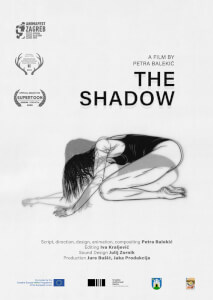
In this experimental animated film, a woman explores the layers of her own body and inner world. Through a symbolic depiction of separation and reconnection with herself, the film examines the dynamics of roughness and tenderness in self-perception. An intimate journey that delves into the complexity of self-acceptance and inner harmony.
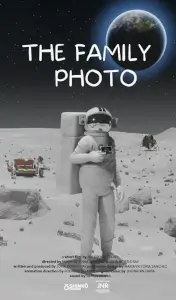
What happened after an Earth astronaut left a family photo on the moon fifty-plus years ago? This animated short explores the butterfly effect of such an action. How will it affect us all?
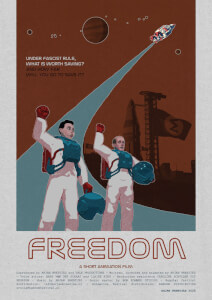
Under fascist rule, what is worth saving? And how far will you go to save it? Two astronauts try to rescue forbidden art treasures from a totalitarian regime by smuggling them on their mission to Jupiter. During their long space journey they then encounter some mutual disagreements.
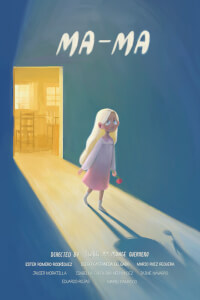
Eva visits her mother who is suffering from Alzheimer's. Through her questions, Eva triggers childhood memories in her mother, who confuses the present with the past. During a walk through the nursing home, a moment of clarity moves Eva deeply.
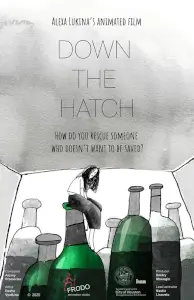
Down the Hatch is a 8-minute hand-drawn animated short about a young girl who discovers her mother trapped inside a wine bottle. Told from the child’s perspective, the film explores addiction, isolation, and the hope of recovery. How do you rescue someone who doesn’t want to be saved?
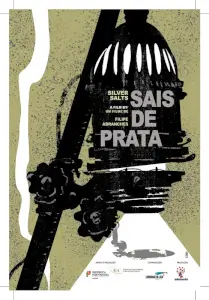
A closet holds a mystery. It once belonged to a photographer and has been locked for years. The protagonist finds boxes of old photographs in it. The past and his relationship with a distant father return. The closet, now a dark room, is where the magic of photographic techniques leads to a rapprochement between the two. The vocabulary and concept of photography translate graphically into emotions. The chemistry of silver salts rebuilds their bond. Everything shatters with a quarrel and a cockroach infestation.
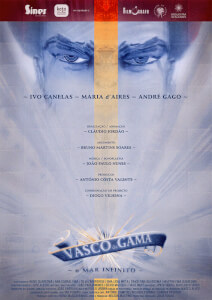
A man at the edge of greatness bringing a nation with him to the top of the world. In 1497, King Manuel I of Portugal charged Vasco da Gama with the task of going to India by sea, crossing the Atlantic and the Indian oceans, facing the storms of sea and land, and the hearts of men. Vasco da Gama is about to do the impossible, sealing his fate with a promise and a staff he sticks in the barren ground – “It’s as certain that I’ll reach India as this staff to grow flowers.” Flowers will emerge from the staff, and Vasco da Gama will go to India, but at what cost? What will he sacrifice? What will be left behind on the way? In one of the most famous journeys in History, this man from Sines will change Portugal… and the world. Um homem à beira da grandeza que trará consigo uma nação para o topo do mundo. Em 1497, o Rei D. Manuel I de Portugal encarregou Vasco da Gama de chegar à Índia por mar, atravessando os oceanos Atlântico e Índico, enfrentando as tormentas dos mares, das terras e dos homens. Vasco da Gama prepara-se para fazer o impossível, selando o seu destino com uma promessa que faz quando espeta uma aguilhada no solo desnudo – “É tão certo eu chegar à Índia como esta aguilhada florir.” A esteva há-de florir da aguilhada e Vasco da Gama chegará à Índia, mas a que custo? O que terá de sacrificar? O que ficará pelo caminho? Numa das viagens mais famosas da História, este homem de Sines mudou Portugal… e mudou o mundo.
This Was Someone is an animated short about consumption and the lives we choose not to see.
 ATHENS ANIMFEST